Moroccan craftsmanship is a living heritage. In the workshops, gestures are passed down, adapted, and meet new uses. Behind a rug, a bowl, or a lantern lie a material, time, and a succession of human decisions that make each creation unique.
Weaving: a language of wool
Textile work begins with the selection, cleaning and sometimes dyeing of the fibers. At the loom, the weaver builds the rug line after line. The geometric compositions, colors and variations in density give the piece its rhythm. Subtle irregularity is not a flaw: it reveals the hand and the time that went into the work.
Pottery and ceramic
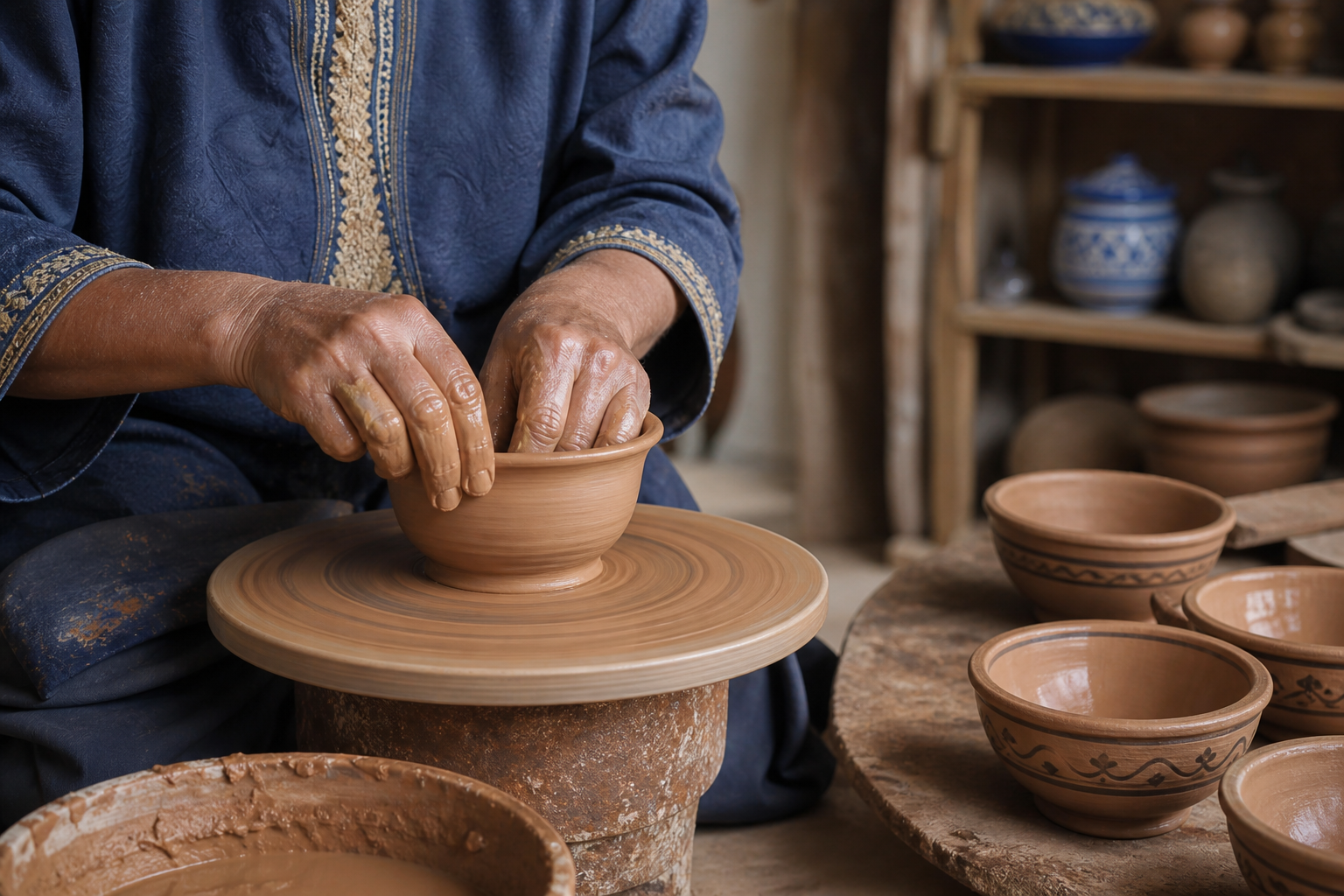
The clay is prepared, shaped, dried and then fired. Depending on the region and use, the pieces can remain raw, receive a slip coat or be decorated before a second firing. Bowls, platters and vases thus combine everyday function with graphic expression. For food use, it is essential to check that the finish is designed for that purpose.
Carved wood
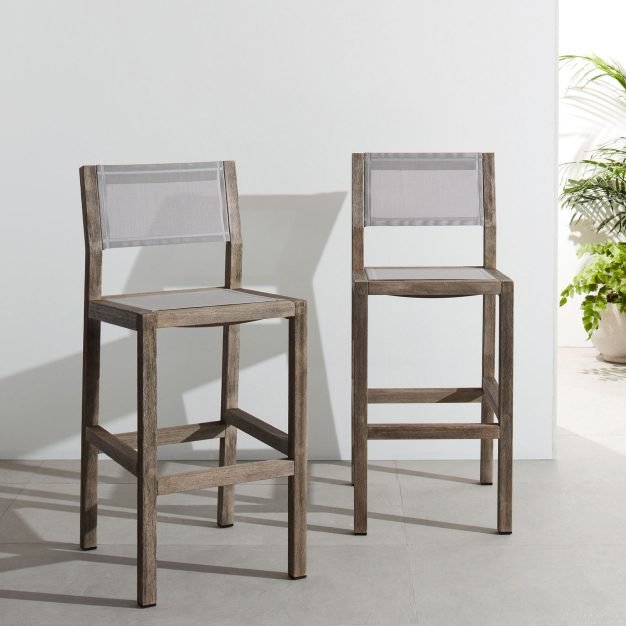
Cedar, thuya, and other woods are worked to create tables, trays, doors, and decorative objects. The carving demands great precision, especially in repeated geometric motifs. The wood's grain and tones remain visible, giving depth and warmth to every object.
Chiseled and hammered metal
Trays, mirrors, and lighting fixtures are born from sheets of brass, copper, or other metals. Hammering creates a vibrant surface; perforation turns a luminaire into a shadow projector. The patina evolves naturally and can be preserved with non-abrasive care.
Leather and leather goods
Ottomans, slippers, bags, and accessories showcase the suppleness of leather and the mastery of stitching. A beautiful piece is recognized by the balance of its cut, the solidity of its joins, and its finishes. Natural leather develops a patina that is part of its story.
Why support handmade?
Choosing a handcrafted creation helps sustain local skills and gives value to the time spent making it. It is also a way to consume less, but better: a repairable, durable object full of meaning is a worthy replacement for several standardized accessories.
Appreciating a handcrafted piece
Ask who made it, from what material, and using what technique. Look at the details, touch the textures, and embrace the nuances inherent to handmade work. Moroccan craftsmanship stays alive precisely because it isn't static: it connects heritage, creativity, and today's interiors.